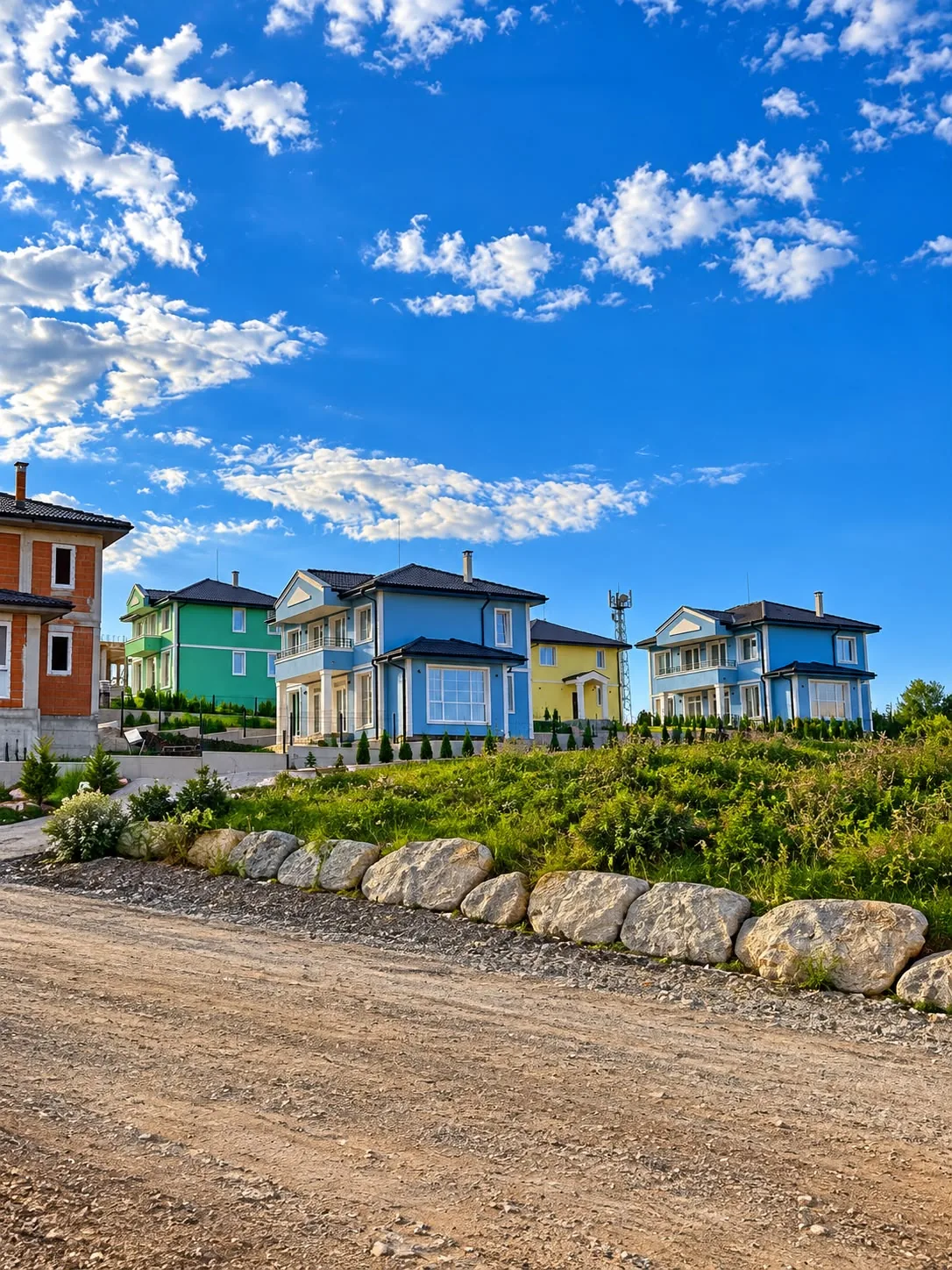
Buying property in Bulgaria begins with checking what you may legally own and ends with a registered notarial deed, possession and local administration. For a house under construction, those stages may happen months apart. You need independent legal checks, a written payment plan and a budget that covers more than the advertised price.
Can foreigners buy houses, apartments and land in Bulgaria?
EU and EEA citizens can generally buy residential buildings and land in Bulgaria in their own names. Non-EU buyers may buy buildings and apartments, but land ownership is restricted, so a house with its own plot commonly requires a Bulgarian company. Agricultural land and special ownership situations require separate legal checks. Bulgarian Point of Single Contact, reviewed 13 October 2026.
An EOOD is a Bulgarian single-owner limited-liability company. It involves incorporation and ongoing filing or accounting obligations. Bulsmetka, 23 September 2026.
As at 28 September 2026, Bulgarian accounting firm Bulsmetka quotes €280 excluding VAT to incorporate an EOOD, including the €28.12 electronic state registration fee, local notarisation and the capital account. Bulsmetka pricing, 28 September 2026.
For ongoing compliance, the same published tariff lists €150 a month excluding VAT for full accounting including annual filings, or €120 excluding VAT for a one-off no-activity declaration only where that status applies; neither is a confirmed annual quotation for a company that holds a house and plot. Bulsmetka pricing, 28 September 2026.
How do you find a property and check that it is legally safe to buy?
Finding a suitable property is only the first step. Before sending a deposit, have an independent lawyer check the seller's right to sell, the property's title history, mortgages, other recorded claims, boundaries and construction documents. View the actual site and obtain written specifications. A photograph or developer brochure is not proof of legal status. Blagoy Tumbarov, 11 August 2026.
The legal checks should follow this sequence:
-
Check who owns the land and buildings and establish the history of title transfers.
-
Search the Property Register for mortgages, attachments and other interests.
-
Compare the cadastral identifier and plan with the land and buildings being sold.
-
Review zoning, the building permit, approved drawings and available construction certificates.
-
Check that the seller or authorised signatory is legally entitled to complete the sale.
-
For a development, check the developer's right to build and any lender security over the land.
Bulgaria's construction-permit rules require relevant planning approvals and a valid permit where the law demands them. These are substantive checks, not optional documents to request after signing. Bulgarian Ministry of Economy, updated 18 June 2025.
What is a property reservation, and is the payment refundable?
A reservation agreement sets out whether and for how long a seller agrees to hold a particular property, what the buyer must pay and when the payment is returned or retained. It does not make the buyer the owner. Refund rights cannot be assumed: they depend on the wording and applicable law. Blagoy Tumbarov, updated 17 August 2026.
What is a preliminary property contract, and what should a buyer's lawyer check?
The Bulgarian preliminary contract (predvaritelen dogovor) is a binding written agreement setting the essential terms of a future property transfer. It identifies the parties, property, price and completion obligations, but does not itself transfer ownership. It may provide remedies for failure to complete, which makes legal review necessary before signing. Bulgarian Registry Agency guidance, reviewed 13 October 2026.
A 10% deposit is common practice, not a statutory requirement, according to Registry Agency guidance reviewed on 13 October 2026. That is €20,000 on a €200,000 purchase.
Ask your lawyer to review the full property description, land ownership, sale price, VAT treatment, completion standard, deadlines, penalties, payment mechanism and consequences of mortgage refusal. Require explicit treatment of mortgages and other encumbrances. For construction, attach a written technical specification rather than relying on marketing materials.
How are payments made on a Bulgarian house that is still being built?
There is no single payment schedule for every house under construction. Instalments may be connected to contractual dates, documented construction progress, the final notarial deed or handover. Each trigger, amount and remedy for delay must appear in writing. Payments made before ownership transfers expose buyers to additional financial risk. Registry Agency construction guidance, reviewed 13 October 2026.
Ask for a payment table identifying the exact milestone, documentary evidence and amount due. It should distinguish legal ownership, completion of building work, official occupancy approval and physical handover. Those are not necessarily the same event.
An off-plan buyer may have paid money while holding only contractual rights against the developer. If the developer becomes insolvent, recovery can be difficult, especially where a lender has security over the land. This risk is examined by Bulgarian property lawyer Lachezar Vesov in a guide dated 26 June 2026. Vesov, 26 June 2026.
Kavaleo's project information dated 13 October 2026 says payment arrangements may extend up to two years after handover. That is not an offer of a particular instalment schedule. Ask for the full individual terms before signing.
Can you legally occupy a Bulgarian house before Act 16?
A house cannot be lawfully occupied merely because its structure or interior looks complete. The appropriate occupancy authorisation must be in place. What people call Act 16 is the final approval stage, but the formal document depends on the construction category. It is separate from both ownership and interior finishing. Bulgarian Ministry of Economy, updated 18 June 2025.
Verify the occupancy approval for the specific Kavaleo house and plot you intend to buy.
What happens at the Bulgarian notary when you buy property?
The final property transfer is signed before a Bulgarian notary with jurisdiction over the location. The notary checks identification, the parties' authority, ownership and the legal form of the deed, then reads the document for signing. The notary's statutory checks do not replace a buyer's independently appointed lawyer. Registry Agency guidance, reviewed 13 October 2026.
The practical sequence is:
-
Your lawyer rechecks title, outstanding mortgage arrangements and agreed conditions.
-
The parties or their duly authorised representatives attend the notarial appointment.
-
The required identification, declarations and documents are checked.
-
Any required interpreter and translations are provided.
-
The notarial deed is read and signed.
-
Completion payments and registration follow the agreed and legally applicable procedure.
Buying remotely is possible through a properly authorised representative, subject to the relevant power-of-attorney requirements. That convenience does not replace physically checking the property. Blagoy Tumbarov, updated 17 August 2026.
When does ownership transfer, and when is the deed registered?
A valid notarial deed is the formal transfer instrument, and the transaction must be registered in Bulgaria's Property Register. Obtain the executed deed and evidence of registration, and check that the registered property details match your purchase. Ownership, permitted occupation and physical possession must be distinguished in the contract. Registry Agency guidance, reviewed 13 October 2026.
Must foreign owners register with BULSTAT within seven days?
Foreign individuals who own Bulgarian real estate and lack a Bulgarian EGN or foreigner's personal identification number are among those subject to BULSTAT registration. The Registry Agency requires registration applications within seven days of the obligation arising. The correct applicant and timing depend on the ownership structure, including any company involvement. Registry Agency, reviewed 13 October 2026.
How much does buying a Bulgarian property cost beyond the price?
The agreed price is only one part of the purchase budget. Municipal transfer tax, notary fees and registration are the main statutory costs, while lawyers, agents, translations and financing can add further charges. The 2026 budgeting allowance supplied for this guide is approximately 5–6%, not a guaranteed ceiling on spending.
Can a German, Dutch or Polish buyer get a mortgage in Bulgaria?
Some Bulgarian lenders consider foreign buyers, but neither EU citizenship nor documented employment guarantees approval. The buyer's income, existing debt, proposed property and bank valuation all matter. A lender's valuation may be lower than the agreed sale price, leaving the buyer to supply more cash or renegotiate. Blagoy Tumbarov, updated 17 August 2026.
The supplied early-2026 market brief cites foreign-buyer rates around 3.5–5% and loan-to-value ratios around 60–75%. These are historical indications, not current offers.
What must you do after buying the property?
After completion, check the registration, deal with any BULSTAT obligation, confirm the municipality's tax record, arrange utilities and consider suitable property insurance. For a newly built or unfinished house, document outstanding work and the legal occupancy status. Managing a second home abroad also requires a plan for problems while you are away.
-
Collect the executed deed, registration evidence and handover protocol.
-
Record electricity and water meter readings and arrange account transfers or new connections.
-
Confirm BULSTAT obligations and the municipal property-tax account.
-
Ask an insurer what cover is appropriate for the actual condition and use of the property.
-
Arrange inspections, repairs and a reliable local contact if you will not live there full-time.
For an ordinary purchase, the notary and registry notify the municipality, and the property-tax account is normally opened without a separate purchase declaration. Special cases can differ. Bulgarian National Revenue Agency guidance, reviewed 13 October 2026.
The 2026 figures in the approved legal brief suggest roughly €50–€200 annually for property tax on a normal home and €100–€400 separately for municipal rubbish fees. Actual bills depend on the property and municipality. These amounts exclude insurance, maintenance, repairs, utilities, travel and any property-management service.
How long does buying property in Bulgaria take from enquiry to keys?
A conventional sale can take approximately six to ten weeks after a property has been selected, according to Bulgarian property lawyer Blagoy Tumbarov's guide updated on 17 August 2026. That estimate is not a construction timetable. A house bought before completion may take substantially longer to become legally occupiable and available for handover.
A realistic sequence is:
-
Enquiry, viewings and property selection — no reliable fixed duration. Take the time needed to visit, obtain documentation and compare the actual property with the advertised terms.
-
Legal and technical due diligence — duration depends on the documents and defects found. Do not proceed to a financially binding step before the appropriate checks are complete.
-
Reservation and preliminary contract — some transactions allow roughly 10–14 days between them. This is an indicative period from Tumbarov's guide, updated 17 August 2026, not a required schedule.
-
Financing and notary preparation — can take around 2–4 weeks in conventional transactions. This is another practitioner estimate from 17 August 2026; bank approval and complex titles can extend it.
-
Notarial transfer and registration — after agreed legal conditions have been met. Your lawyer should confirm payment and registration procedures.
-
Occupancy permission and handover — project-specific for construction purchases. The contract must identify the date and conditions, and the consequences if completion is delayed.
-
BULSTAT, utilities and local administration — arrange immediately after acquisition where required. The statutory BULSTAT application period is seven days from the relevant obligation, per the Registry Agency, reviewed 13 October 2026.
Is buying a house near Burgas the right choice for a foreign buyer?
The Burgas area may suit someone who wants a detached house with land and accepts travel by car. It is less suitable if you need walking access to city services or reliable direct international flights throughout the year. Check ordinary travel routines and winter access, rather than evaluating the location only during a summer viewing.
Kavaleo's project information dated 13 October 2026 places its Cherni Vrah collection about 15 minutes by car from Burgas and from the Black Sea, and about 25 minutes from Burgas Airport. Those are driving estimates, not promises of public transport or walking access.
Burgas Airport operates many seasonal international routes. The airport operator's programme published on 26 March 2026 primarily describes summer services, including connections to Poland and Germany. A buyer who expects easy winter access should check actual year-round journeys before committing. Fraport Bulgaria, 26 March 2026.
What else do foreign buyers ask before signing?
Foreign buyers often ask whether they can purchase remotely, lose a reservation payment, occupy a house with Act 16, or rely on the advertised price. The answers depend on the documents and terms for the specific property. A buyer should not treat the seller's promotional material as an explanation of these obligations.
Can I buy a Bulgarian property without visiting in person?
Yes. A transaction may be completed using a properly authorised representative, subject to Bulgarian requirements for the power of attorney and other documents. But a remote legal transfer does not prove that a property meets the promised physical specification. Arrange independent inspection and a documented handover before releasing the money required under your contract. Tumbarov, 17 August 2026.
Can I lose my reservation payment if I decide not to proceed?
Yes, potentially. The answer depends on what you agreed, the reason you withdraw and how the payment is treated under Bulgarian law. A reservation should clearly state the refund conditions, the end date and any seller obligations. Your lawyer should review these before money changes hands, not after a disagreement starts.
Is Act 16 enough to make a new Bulgarian house ready to live in?
No. The relevant occupancy authorisation concerns lawful use of the building, not whether the interior is fitted out to your preferred standard. A legally occupiable property may still lack finishes or equipment excluded from the contract. Ask for the written delivery specification and independent quotes for everything needed before you can comfortably live there.
Why shouldn't I use the lawyer recommended by the developer?
The lawyer's role is to challenge the seller's documents and contractual protections when necessary. You should choose and instruct someone who is independent of the seller and paid by you. This applies even if the developer is Kavaleo and even if the recommended professional is qualified. Independence matters most when negotiations become difficult.
Can I rely on the advertised property price as my final cost?
No. You need a written budget for statutory transfer charges and any legal, agency, translation or financing costs. If you are buying unfinished construction, obtain a separate finishing and furnishing estimate. Also budget for insurance, maintenance and visits after purchase. Do not commit your entire available cash to the price in the advertisement.
Is a Bulgarian property automatically a good investment because it costs less?
No. A lower purchase price alone says nothing about how quickly a home could be sold, the eventual sale price or the cost of keeping it. Treat the property first as a home you may want to use. Any investment case requires independent local evidence and should not rely on general statements about the market.
Before paying, download Kavaleo's Foreign Buyer's Guide, consult the property-buying FAQ and review Kavaleo's advertised homes. Those pages are starting points for information, not substitutes for your independent lawyer's review of a specific transaction.